
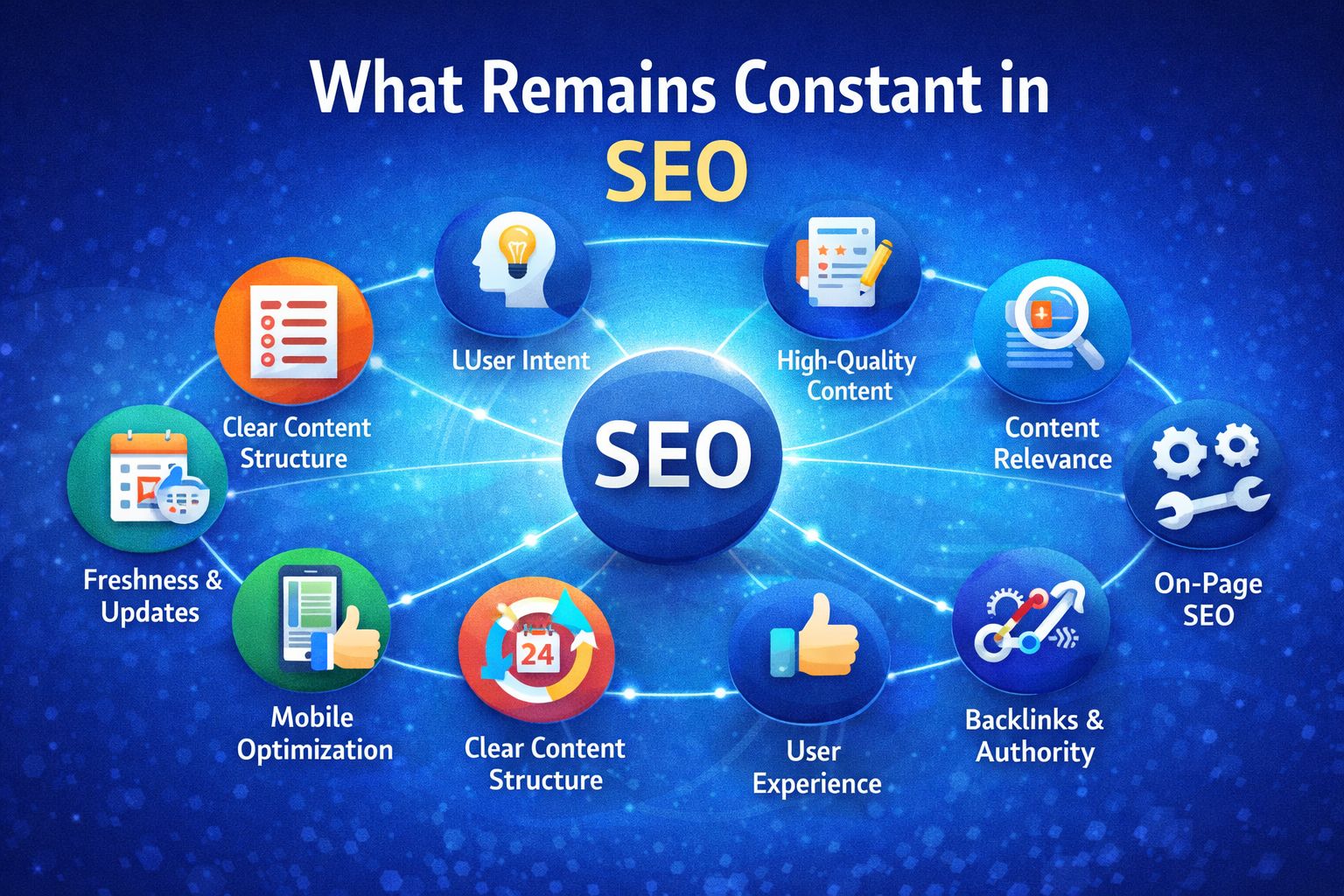
SEO in 2026 focuses on delivering relevant, high-quality, and structured content that satisfies user intent while maintaining strong technical and user experience standards.
Even as algorithms evolve, the fundamentals of SEO continue to remain consistent.
Search engine optimization continues to change with AI integration, algorithm updates, and shifting user behavior. However, the core principles that drive rankings and visibility have not disappeared.
Instead of focusing only on trends, long-term growth depends on mastering what consistently works.
This guide explains what remains constant in SEO in 2026 and how to apply these principles effectively.
Search Intent Remains the Core of SEO
Search engines are designed to deliver the most relevant results. This makes search intent the foundation of SEO.
Types of Search Intent
- Informational – Users want knowledge
- Navigational – Users want a specific page
- Transactional – Users want to take action
How to Align Content
- Match content format to the query
- Use clear headings that reflect user questions
- Provide direct answers early
Example
For a query like “SEO in 2026”, users expect:
- trends
- practical insights
- what still works
Content that ignores these expectations will not perform well.
Content Quality Continues to Drive Rankings
High-quality content remains one of the strongest ranking signals.
What Defines Quality Content
- clear explanations
- structured format
- real-world examples
- actionable insights
Practical Content Improvement
- write on real search queries
- simplify complex ideas
- refine clarity during editing
Key Insight:
Content that is easy to understand and immediately useful performs better.
User Experience Still Impacts SEO
Search engines evaluate how users interact with pages.
Key UX Signals
- page speed
- mobile responsiveness
- navigation clarity
- readability
Practical UX Improvements
- use short paragraphs
- add bullet points
- avoid clutter
- improve load time
Scenario:
When two pages have similar content, the one with better UX ranks higher.
Keywords Still Matter But Context Wins
Keywords remain important, but usage has evolved.
What Remains Constant
- include keywords naturally
- use keywords in headings
- align keywords with intent
What Has Changed
- semantic keywords matter more
- context outweighs exact matches
- natural language is preferred
Smart Keyword Strategy
- use variations of keywords
- answer related queries
- focus on topic completeness
Backlinks Continue to Build Authority
Backlinks remain a strong trust signal.
What Still Works
- links from relevant sources
- valuable content that earns links
- relationship-based link building
What Does Not Work
- spam links
- irrelevant placements
- low-quality backlinks
Practical Approach
- publish useful guides
- create original insights
- focus on value-driven linking
Content Structure Still Improves Visibility
Structure plays a major role in readability and ranking.
Essential Structure Elements
- clear H1, H2, H3 hierarchy
- short paragraphs
- bullet points
- logical flow
Featured Snippet Optimization
- answer questions directly
- use concise explanations
- format content clearly
Consistency Remains Critical for Growth
SEO success comes from continuous effort.
Benefits of Consistency
- builds topical authority
- improves indexing
- increases visibility
Daily SEO Framework
- create or update content regularly
- target real user queries
- track performance
- refine content
Internal Linking Still Supports SEO
Internal links help search engines understand your site.
Benefits
- improves crawlability
- distributes authority
- enhances navigation
Best Practices
- link related pages
- use descriptive anchor text
- guide users deeper into content
Technical SEO Fundamentals Remain Essential
Technical SEO ensures that content is accessible and indexable.
Core Elements
- proper indexing
- clean URL structure
- mobile optimization
- HTTPS security
Common Issues to Avoid
- broken links
- slow loading pages
- duplicate content
Trust and Credibility Continue to Matter
Search engines prioritize trustworthy content.
Trust Signals
- accurate information
- updated content
- clear authorship
- transparency
How to Build Trust
- use data and examples
- maintain accuracy
- update content regularly
AI Supports SEO, But Does Not Replace It
AI tools enhance SEO processes but do not replace fundamentals.
What AI Helps With
- content generation
- keyword research
- data analysis
What Still Requires Human Input
- understanding user intent
- building trust
- creating meaningful content
Practical SEO Learning Approach
To improve SEO skills consistently:
Daily Practice
- analyze search results
- write based on real queries
- refine content
Learning Method
- explain concepts simply
- use conversational tone
- focus on clarity
Quick Summary
- search intent remains essential
- content quality drives rankings
- user experience influences performance
- keywords matter when used naturally
- backlinks build authority
- structure improves visibility
- consistency delivers growth
- technical SEO supports indexing
- trust strengthens credibility
Conclusion
SEO in 2026 is not about constant change. It is about applying proven fundamentals consistently.Focusing on user needs, creating useful content, and improving clarity will continue to drive long-term success.The fundamentals remain stable. Execution is what creates results.